
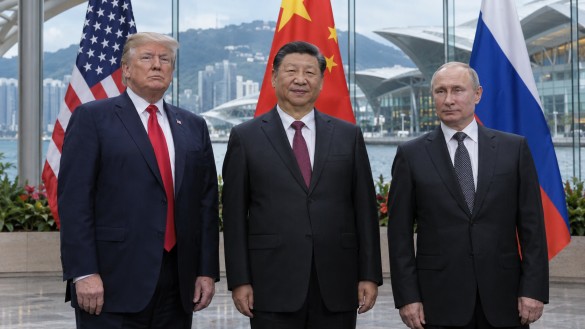
In a significant diplomatic development, U.S. President Donald Trump, Chinese President Xi Jinping, and Russian President Vladimir Putin are set to hold an unprecedented trilateral meeting during the Asia-Pacific Economic Cooperation (APEC) summit in Shenzhen, China, next week. This meeting marks a rare convergence of the leaders of the world’s three major nuclear powers, focusing primarily on the ongoing conflict in Iran and discussions surrounding nuclear weapons stockpiles.
The White House has confirmed the meeting, highlighting Trump’s interest in addressing the Iran conflict and proposing a new nuclear arms agreement that would involve the United States, Russia, and China. This initiative comes in the wake of the expiration of the New START treaty between the U.S. and Russia in February 2026, which previously regulated the nuclear arsenals of the two nations. Washington is keen on including China in a new agreement, though Beijing has been reluctant, given its significantly smaller nuclear arsenal of approximately 600 warheads compared to the over 5,000 each held by the U.S. and Russia.
The timing of this summit coincides with growing strategic cooperation between Beijing and Moscow. Since the onset of the Ukraine conflict in 2022, China has bolstered its economic ties with Russia, notably through energy purchases and the supply of technological components. Additionally, Russian President Putin has consistently supported China’s stance on Taiwan, illustrating the strengthening bond between the two nations.
The proposed trilateral talks have raised concerns in Ukraine, particularly from President Volodymyr Zelenskyy, who is wary of discussions on the conflict occurring without Kyiv’s involvement. Despite these concerns, Trump has emphasized that Ukraine will not be a central issue in the planned discussions.
While some analysts believe the meeting’s symbolic importance might outweigh any immediate political breakthroughs, the gathering could potentially enhance China’s international influence and reinforce Russia’s standing as a significant global power. However, the convergence of these leaders might also complicate China’s efforts to advocate for multilateral cooperation and free trade at the APEC summit.