
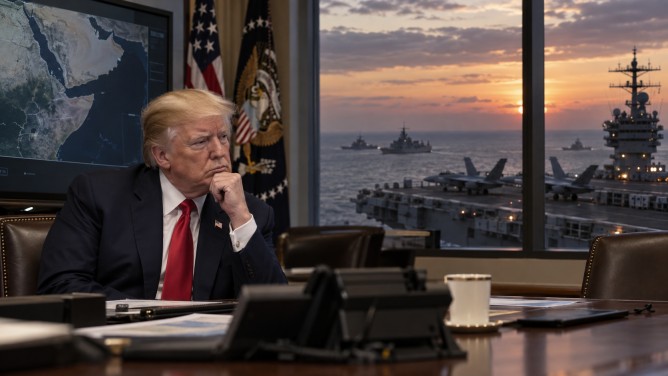
The ongoing conflict in Yemen, marked by heightened tensions involving Iran-backed Houthi forces, has led to a complex geopolitical situation with potential global ramifications. As the Houthis intensify their attacks on Saudi interests, the United States finds itself deliberating over its role in the region, particularly concerning military intervention.
President Donald Trump has recently postponed a decision on launching military strikes against Houthi targets in Yemen. This delay comes despite the U.S. military’s preparations for possible operations following requests from Saudi Arabia. The kingdom, a key ally of the United States, has sought American intervention as it grapples with the escalating Houthi attacks.
Initially, President Trump was against military action but reconsidered after a conversation with Saudi Crown Prince Mohammed bin Salman, prompting the Pentagon to draft plans for potential airstrikes. However, by Sunday, the administration chose to hold off on any immediate military action, leaving the situation in flux as tensions continue to simmer.
The U.S. military’s involvement in the broader conflict with Iran adds another layer of complexity. Some U.S. officials express concern that opening another front against the Houthis might overextend American military resources, already stretched by other engagements in the region.
The conflict in Yemen has seen the Houthis battling the internationally recognized government, supported by Saudi Arabia. This struggle has reignited after a brief lull, with strategic areas like the Red Sea and the Bab al-Mandab Strait becoming focal points of renewed hostilities, raising alarms about potential impacts on regional security and global energy routes.
Experts and U.S. officials are also questioning the efficacy of airstrikes alone in compelling the Houthis to alter their strategic stance. Historical precedents show that military interventions have not succeeded in achieving long-term peace or stability in the region, prompting a reevaluation of potential strategies to address the crisis.