
The global conversation surrounding artificial intelligence continues to evolve as world leaders and tech companies grapple with its implications. Amidst this backdrop, U.S. President Donald Trump has proposed a shift in terminology, suggesting that “artificial intelligence” should be rebranded as “super intelligence.” Trump believes the term “artificial” underplays the technology’s potential capabilities.
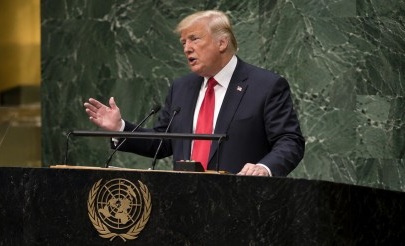
Speaking at the United Nations General Assembly in New York, Trump addressed the issue of international regulation of AI, dismissing widespread concerns about its potential dangers as exaggerated. He rejected the notion of establishing a global control system for AI, arguing that such measures could stifle innovation. Trump emphasized the economic potential of AI, suggesting it could surpass the impact of previous technological revolutions.
The president’s comments come at a time of heightened debate over AI governance. Recently, more than 20 international leaders have advocated for enhanced cooperation, safety protocols, and standardized practices for advanced AI systems. However, the U.S. administration remains focused on national rather than international oversight.
To bolster the U.S.’s AI efforts, Trump proposed the creation of an “AI Force” and the appointment of an AI czar to oversee the technology’s development within the country. While these suggestions indicate a move towards more structured management, the administration has yet to provide detailed plans on how these initiatives would be implemented.
Interestingly, the term “superintelligence” already carries specific connotations within AI research, typically referring to a hypothetical system with capabilities far exceeding human intelligence across various tasks. Trump’s broader application of the term aims to reflect the technology’s transformative potential, though it diverges from the existing academic context.