
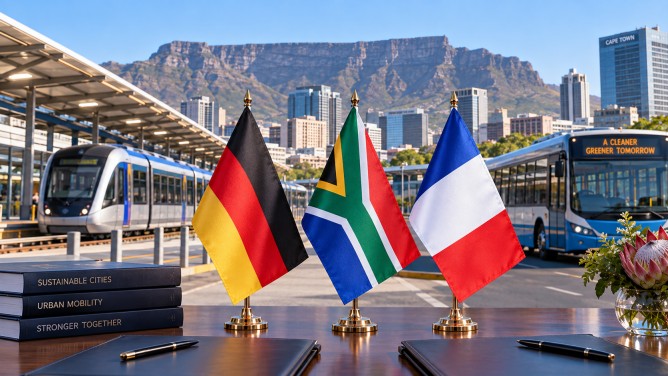
In a collaborative effort to bolster essential municipal services in South Africa, Germany and France have pledged €300 million, or roughly R5.6 billion, in concessional financing. This initiative is targeted at enhancing electricity, water, sanitation, and waste management systems across the country’s eight major metropolitan areas. The investment is directed at the Metro Trading Services Reform programme, which aims to improve both the financial and operational efficiency of these vital services, ensuring that the revenue generated is reinvested into infrastructure development.
These reforms are particularly crucial for the metropolitan municipalities, which collectively cater to over 22 million residents. By addressing infrastructure backlogs and reducing service disruptions, the programme seeks to foster long-term financial stability in South Africa’s major cities. Germany is contributing €200 million while France is providing €100 million, reinforcing their commitment to South Africa’s Just Energy Transition programme. The South African government has highlighted the importance of enhancing municipal services as a foundational step in supporting the energy transition, potentially attracting further public and private investments, especially for modernizing electricity distribution networks.
While this financial commitment marks significant progress, the scale of infrastructure challenges in these metropolitan areas indicates a need for additional financing. Previously, Germany has extended concessional loans to Johannesburg and Cape Town, aimed at upgrading electricity grids and integrating renewable energy solutions. Similarly, France has played an active role in supporting infrastructure and climate resilience initiatives within various South African municipalities.
The reform programme is an integral component of broader efforts to improve municipal governance and financial management. By ensuring that essential services generate adequate revenue, these initiatives aim to sustain and expand infrastructure over the long term. For the residents of these metropolitan areas, the ultimate goal is to see these investments translate into more reliable electricity, water, sanitation, and waste services, laying the groundwork for financially sustainable urban systems that support ongoing infrastructure development.